Wall Hanging
How to Mount a Deer Head on the Wall
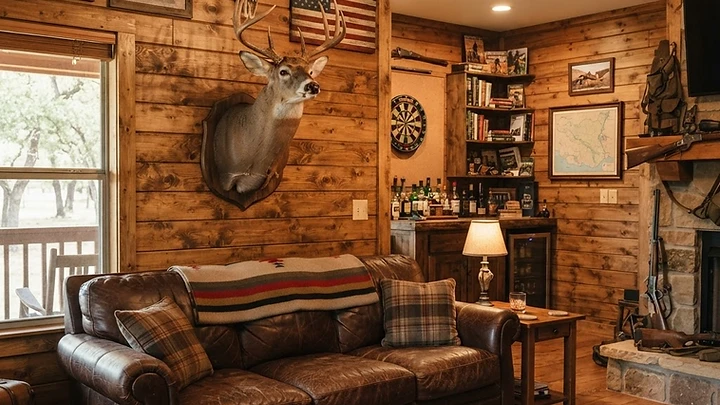
You spent a season on that deer. The early mornings, the cold stand, the shot, the story you'll tell for the next twenty years. The last step of the hunt is getting it on the wall — and doing it justice.
Here's how we mount trophy heads in Granbury and Weatherford homes, and what makes taxidermy different from every other thing we hang.
Treat It Like It's Irreplaceable — Because It Is
A TV can be replaced. A deer head can't. Every mount carries a season of memories that no store sells. That changes the math on how we install: no shortcuts, hardware rated well beyond the actual weight, and anchors that will hold for decades — because "good enough" isn't, for something like this.
The Hardware on the Back of the Mount
Most shoulder mounts come with a hanger on the back — a routed keyhole slot, a metal cleat bar, or a heavy-duty screw eye. That built-in hanger determines what needs to be on the wall:
- Keyhole or cleat mounts need a corresponding screw or bar on the wall, set perfectly level, anchored into a stud
- Screw-eye mounts hang from a lag bolt or heavy hook — which absolutely must land in solid framing, not drywall
- Heavy exotics — elk, moose, exotics — often need blocking between studs or plywood backing spread across two studs
The hanger on the mount is only half the system. The wall side has to be every bit as strong, or stronger.
Where Trophy Mounts Go Wrong
The failure we see most often: someone hangs a mount with a single drywall anchor because "it's just one screw." It isn't just one screw — it's one screw holding a mount that weighs 15, 25, sometimes 40+ pounds, with an awkward forward center of gravity that pulls outward on the wall. Drywall loses that argument eventually. Studs don't.
How High Should a Deer Head Be Mounted?
Most shoulder mounts look best with the nose at or slightly above standing eye level — roughly 60–66 inches to the nose for most rooms. That shows off the mount without craning your neck, and leaves room for a plaque or a second mount below later. (We plan for the second one. There's always a second one.)
The exception is game room walls and above-fireplace spots, where the mount becomes part of a bigger display — and where we plan the whole wall, not just the one animal.
Stone, Brick, and the Man Cave Wall
A lot of game rooms and man caves around here feature stone or brick — gorgeous for trophy walls, but they need masonry-rated anchors and the right drill. Done properly, a stone wall holds a mount just as securely as any stud wall. Done wrong, it's a masonry repair on top of a fallen mount.
Planning the Trophy Wall
If you're building toward a full trophy wall — multiple mounts, plaques, maybe a set of antlers — it's worth laying out the whole wall before hanging the first piece. We hang mounts in planned arrangements so the collection grows into the wall instead of filling it in randomly.
That mount represents the best day of your season. Let's get it on the wall the right way. Get a quote or read more about our taxidermy trophy mounting services.
A Couple Studs
A family-run TV mounting and wall hanging business serving Granbury and Weatherford, Texas. One Stud Teaching the Next — every job teaches the next generation the value of doing it right.
Get a QuoteReady to Hang It the Right Way?
A Couple Studs serves Granbury and Weatherford, Texas — get your free quote.
Got a wall? We've got a Stud.
Get your free quote from A Couple Studs — professional TV mounting and wall hanging in Granbury and Weatherford, Texas.